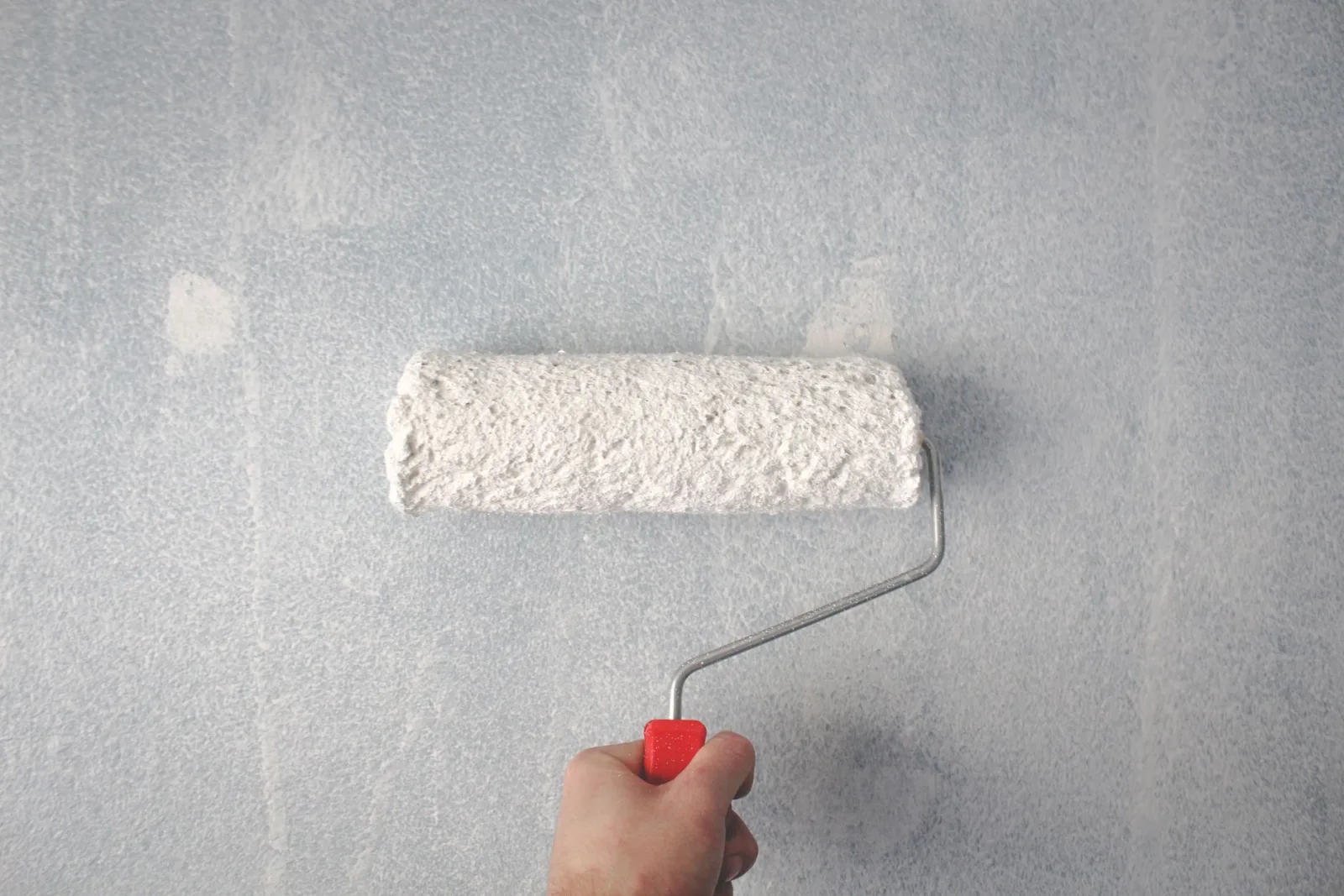
Small holes in plasterboard are filled, palm-sized holes take a mesh patch, and anything bigger needs a new piece of board cut in and taped. All three finish the same way: thin coats of compound, sanded smooth, sealed and painted. The repair itself is simple. Most patches that show afterwards were rushed at the sanding or the sealing stage.
What do you need to patch plasterboard?
For nail and screw holes, a flexible putty knife and a tub of ready-mixed filler is enough. For anything bigger you also need:
- A self-adhesive mesh patch, or an offcut of plasterboard the same thickness as the wall (10 mm and 13 mm are the usual thicknesses).
- Setting compound or joint compound, and a wide taping knife of 150 mm or more.
- Fine sanding sponge or paper, and a dust mask.
- Primer or sealer undercoat, and the wall paint.
How do you fill nail holes and small dents?
Scrape off any raised edge around the hole, press filler in with the knife and draw it flat in one pass. Let it dry, sand it flush with a light touch and wipe the dust off. Deep holes or door-handle dents are filled in two thin coats rather than one thick one, because a thick coat shrinks as it dries and leaves a dip.
How do you patch a hole the size of a hand?
Holes up to around 10 cm, such as a door-handle strike or a removed wall fixing, are patched with a self-adhesive mesh patch centred over the hole. Spread compound over the mesh with the taping knife, pressing it through the mesh into the hole, then leave it to dry fully.
The second coat is wider than the first, and the third wider again, each feathered out so the edge thins to nothing. Sand between coats and after the last one. Three thin coats look better than one heavy one, and a setting compound for the first coat shortens the wait between visits.
How do you repair a large hole in plasterboard?
For a hole larger than a hand, cut it into a neat rectangle with a utility knife so the edges are square. Fix a timber batten behind the opening, screwed through the existing board on each side, to give the new piece something to sit on. Cut a piece of board to fit with a gap of a few millimetres all round, screw it to the batten, then tape the joints with paper or mesh tape and finish with three coats of compound as above.
Match the thickness of the existing board, or the patch will sit proud or sink. If the wall has a texture finish, it also has to be matched on top of the patched area, and this is the step that is hardest to get right on a large patch.
Why does the patch show through the paint?
A patch shows for one of two reasons. Filler absorbs paint differently from the painted wall, so a filled area looks flat or dull under a topcoat unless it has been sealed first. A wide, thin sealer or undercoat coat over the repaired area fixes this. The second reason is a ridge at the edge of the patch, which shows in side light from a window. Sanding the edge feathered out wider than seems necessary avoids it.
Painting the whole wall from corner to corner, rather than just the patched spot, hides any slight difference between new and old paint. The painting service page covers how preparation affects how long a repaint lasts.
When should you stop and not patch it?
Some holes are not patching jobs.
- Older homes may contain asbestos. SafeWork NSW says a home or building built before the late 1980s may contain asbestos, including in walls, ceilings, kitchens and bathrooms, and that cutting or drilling asbestos-containing products can release fibres. In an older house, if the wall lining or a textured ceiling might contain it, leave it alone and have it tested before it is cut or sanded.
- Water is the cause. A soft, stained or sagging area of plasterboard means water has been getting in. The leak has to be found first, whether it is a roof leak or a bathroom problem like those in bathroom paint peeling and mould, or the new patch will fail the same way.
- There is wiring behind it. Holes around switches and power points can expose cables. Patching the plasterboard around a fitting is fine, but moving, extending or touching the wiring is electrical work, and electrical work always needs a licensed electrician in NSW at any price.
- It is a shared wall. In a unit or townhouse, ask the strata manager before cutting into a wall shared with the next unit.
If the surface is sound and the hole is just a hole, it is a small job. Plasterboard patching sits within the handyman work we do, and it is a regular line on a rental turnover list, where it is one of the repairs done before a repaint. The licensing guide explains where the NSW $5,000 line applies. To get a list of holes patched and painted in one visit, send the details through.
Plasterboard repair questions
Why can I still see the patch after painting?
Usually because the filler soaks up paint differently from the wall around it, or because the edge of the patch was not feathered out wide enough. Sealing the filled area with a primer or sealer undercoat before the topcoat evens out the sheen, and sanding the edge smooth with a light touch stops the ridge showing in side light.
How long should I wait between coats of filler?
Until each coat is fully dry. Setting compounds go off in a set time printed on the bag, and air-drying compounds need hours and longer in cool, humid weather. Sanding or coating over a damp coat leaves shrinkage cracks and a patch that has to be redone.
Can I patch plasterboard myself, or do I need a licensed plasterer?
Patching holes is small repair work, well under the $5,000 value at which NSW requires a contractor licence for trade work, so you do not need a licensed tradie for it. The exceptions are the ones that matter for safety, suspected asbestos in an older home and anything involving the wiring behind a switch or power point.
Want a hand with this at your place? Get a free quote or call 0450 959 936.