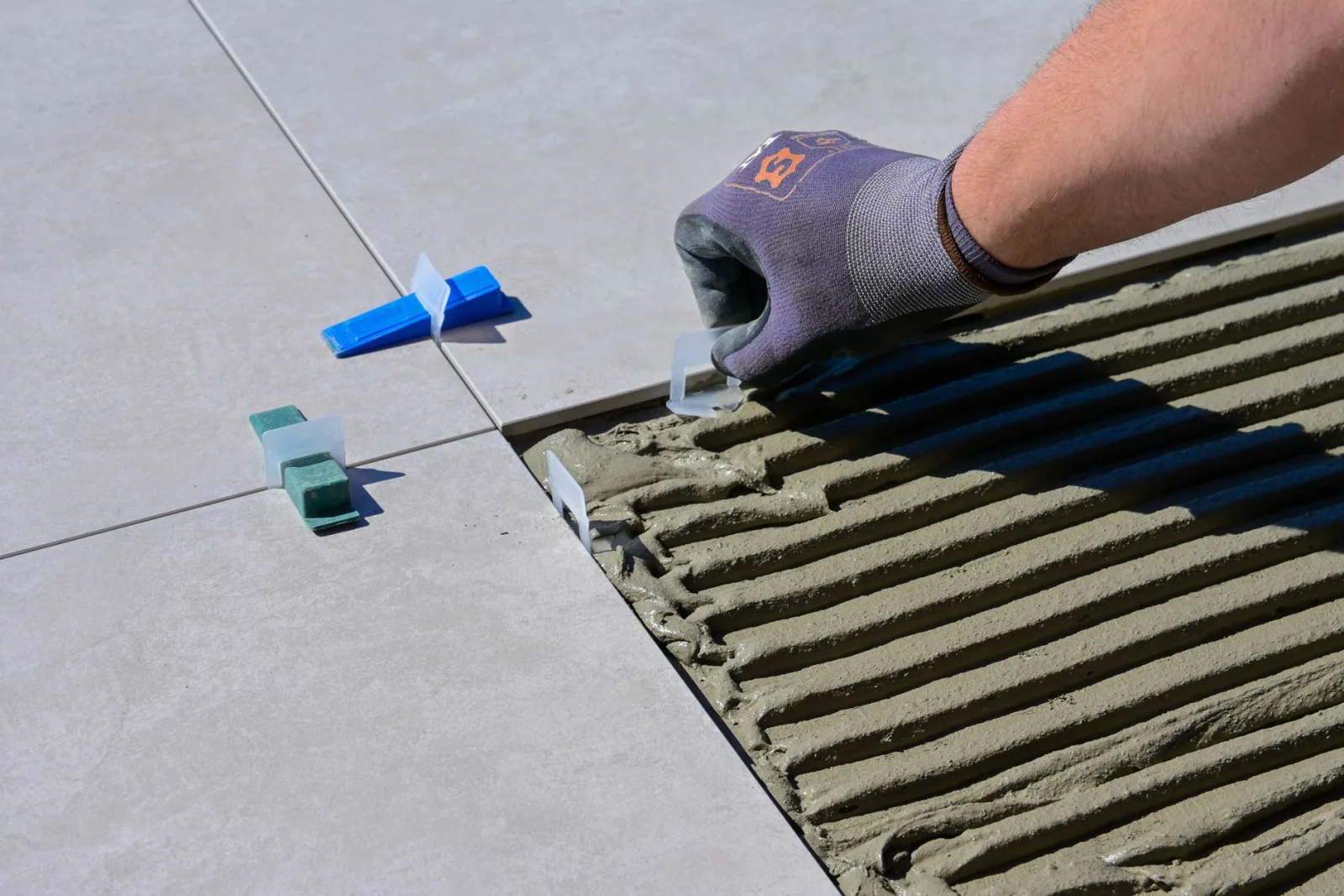
Tiling is unforgiving work in that every mistake stays visible. Setting out is most of it: deciding where the full tiles land and where the cuts go, so the room reads square even when the walls are not.
Floors and walls
New tiling to floors and walls, cut around fixtures and penetrations properly rather than filled with silicone. On older Illawarra homes the floors are rarely level and the walls rarely plumb, so setting out matters more than it does on a new build.
Splashbacks
Kitchen and laundry splashbacks, set out to the bench and the cupboard lines. A splashback that ignores the joinery below it is the sort of thing you cannot stop seeing.
Regrouting and resealing
Grout discolours, cracks and eventually lets water through. Silicone perishes in wet areas. Both are maintenance items with a normal life expectancy, and renewing them is a cheap way to get years out of a bathroom that looks past it.
Repairs
Cracked and drummy tiles replaced where the substrate underneath is sound. Where it is not, we will tell you — relaying over a failed bed just moves the problem.
Common questions
Can you retile a bathroom?
The tiling itself, yes. A full bathroom renovation is a different thing — it involves plumbing and usually electrical, both of which always require specialist licensed trades in NSW. Regrouting, replacing cracked tiles, splashbacks and retiling are squarely what we do.
Do you do waterproofing?
Not new waterproofing, no. A wet-area membrane has to comply with the standard and wants to be done and certified as part of a licensed renovation, and failed waterproofing is the single most expensive thing that goes wrong in a bathroom. What we do is regrout and reseal existing wet areas, which is maintenance on a membrane that is already there.
Is regrouting worth it or should I retile?
If the tiles are sound and the grout has just discoloured, cracked or gone patchy, regrouting transforms a room for a fraction of retiling. If tiles are drummy — hollow-sounding when tapped — the problem is the bed underneath and regrouting will not fix it.
How long before I can use the room?
Usually a day or two for a wet area, because grout and silicone need curing time and rushing that is how you get failures. The exact wait depends on the products used and the weather, so we will give you the timing for your job rather than a general answer.