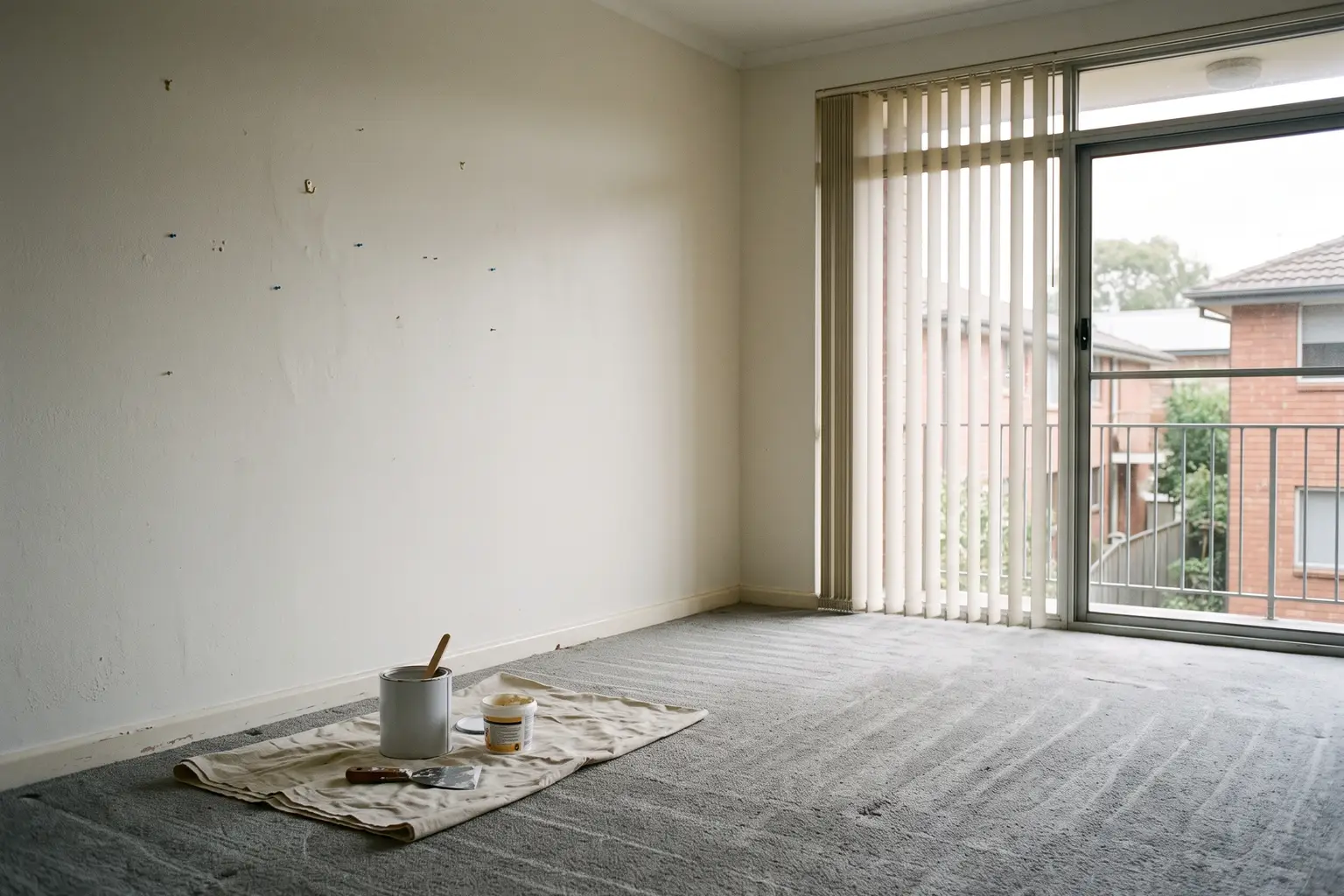
A tenant moving out of a unit at Fairy Meadow paid for a full bond clean, ovens and carpets included, and still had a claim made against the bond. The agent's list had nothing to do with the clean. It was a run of blu-tack marks and picture hook holes in the lounge, a door that had dropped and scraped an arc into the paint, and a cracked tile in the laundry from something heavy going down on it. The cleaner had done exactly what a cleaner does. None of those items are cleaning.
We get the call from both sides of that. Tenants who want to keep the bond, and agents who need the place ready for the next lease. The confusion is the same either way, so here is the line.
Is bond cleaning the same as make-good?
No. A bond clean gets the property clean; make-good gets it back to the condition it was in at the start of the tenancy, allowing for fair wear and tear. They are different trades with different scopes, and a clean, however thorough, does not repair anything. NSW puts the tenant's obligation this way on its fair wear and tear page: at the end of a tenancy the tenant is responsible for leaving the property as near as possible to the same condition as when they started living in it, but they are not responsible for fair wear and tear.
- Cleaning covers surfaces: floors, carpets, walls wiped, kitchen and bathroom scrubbed, oven, windows, cobwebs, the balcony.
- Make-good covers repairs: holes filled and painted, damaged doors and tracks fixed, broken tiles and fittings replaced, anything the tenant broke or allowed to be broken.
- Fair wear and tear is neither. It is the landlord's cost, and neither the tenant nor the cleaner owes anything for it.
The Fairy Meadow claim was all make-good. The clean was fine.
What the condition report is actually for
The whole argument runs off the ingoing condition report. NSW describes it as the document used at the end of a tenancy to check what is fair wear and tear over the time of the tenancy and what might be damage the tenant needs to fix. It is a comparison, not a standard. A wall that was marked at the start does not have to come back unmarked.
Which is why the first thing we ask for on any end-of-lease job is the ingoing report with its photos. Working off what looks tired instead of what changed is how both sides overspend. A tenant repaints a wall that was already scuffed at the start and gets pinged for an unapproved paint job. An owner pays to repair something the report shows was that way before the lease.
Wear and tear versus damage, with the NSW examples
The state publishes a list of paired examples and they are worth reading before anyone gets a quote, because they settle most arguments. A few from the page, in the areas we actually get called about:
- Walls: paint worn off near a light switch is wear and tear. Damage to paint from removing posters stuck with blu-tack or sticky tape is damage.
- Carpet: furniture indentations and traffic marks are wear and tear. Stains or burn marks are damage.
- Floors: scuffed timber floors are wear and tear. Badly scratched or gouged timber floors are damage.
- Doors and windows: loose hinges, loose handles and worn sliding tracks are wear and tear. Broken glass is damage.
- Kitchen: a worn benchtop is wear and tear. Burns or cuts in the benchtop are damage.
Notice what falls on each side. Almost every wear and tear item is something an owner should have on a maintenance cycle anyway. Almost every damage item is a repair job, not a cleaning job, and a cleaner cannot make it go away.
The jobs that sit between the two
Some items get argued about because they look like cleaning and behave like repairs.
Grout and silicone are the usual one. Mouldy silicone around a shower comes up on the outgoing inspection every time. If it is mould on sound silicone, that is cleaning. If the silicone has split and pulled away, it needs cutting out and redoing, which is a tiling job, and whether the tenant pays depends on whether it was already going at the start.
Walls are the other. A bond clean will wipe marks off low-sheen paint. It will not fill hook holes, and it will not hide the flat patch where someone scrubbed a mark too hard and took the sheen off. Those get filled, sanded and touched up, which is the patch-and-paint work in the rental turnover post, and it is painting, not cleaning.
Then the small stuff: a flyscreen with a tear, a towel rail hanging off one screw, a cupboard door that has dropped, a blind that will not raise. None of it is cleaning. All of it is handyman work, and it is the list an agent photographs first.
Who books what
If you are the tenant, book the clean last, after the repairs. A painter walking through a freshly cleaned unit undoes the clean, and the cleaner cannot work around a wall that is still being filled. Get the repair items priced against the ingoing report, do them, then clean.
If you are the owner or the agent, split the invoice the same way, because the bond can only be claimed against damage and the cleaning standard is a separate question. A make-good quote that itemises each repair against the report is one you can put in front of the tenant or the Tribunal. A single line reading "make-good and clean" is not.
Either way, the part that is ours is the repairs. That is what property maintenance work looks like at the end of a lease: the report, the photos, the list of what changed, and a price for putting it back. Anything electrical, plumbing or gas on that list goes to a licensed trade, and we will flag it rather than touch it. Send us the report and the outgoing photos and we will tell you which items are cleaning, which are wear and tear, and which are ours.
Want a hand with this at your place? Get a free quote or call 0450 959 936.